
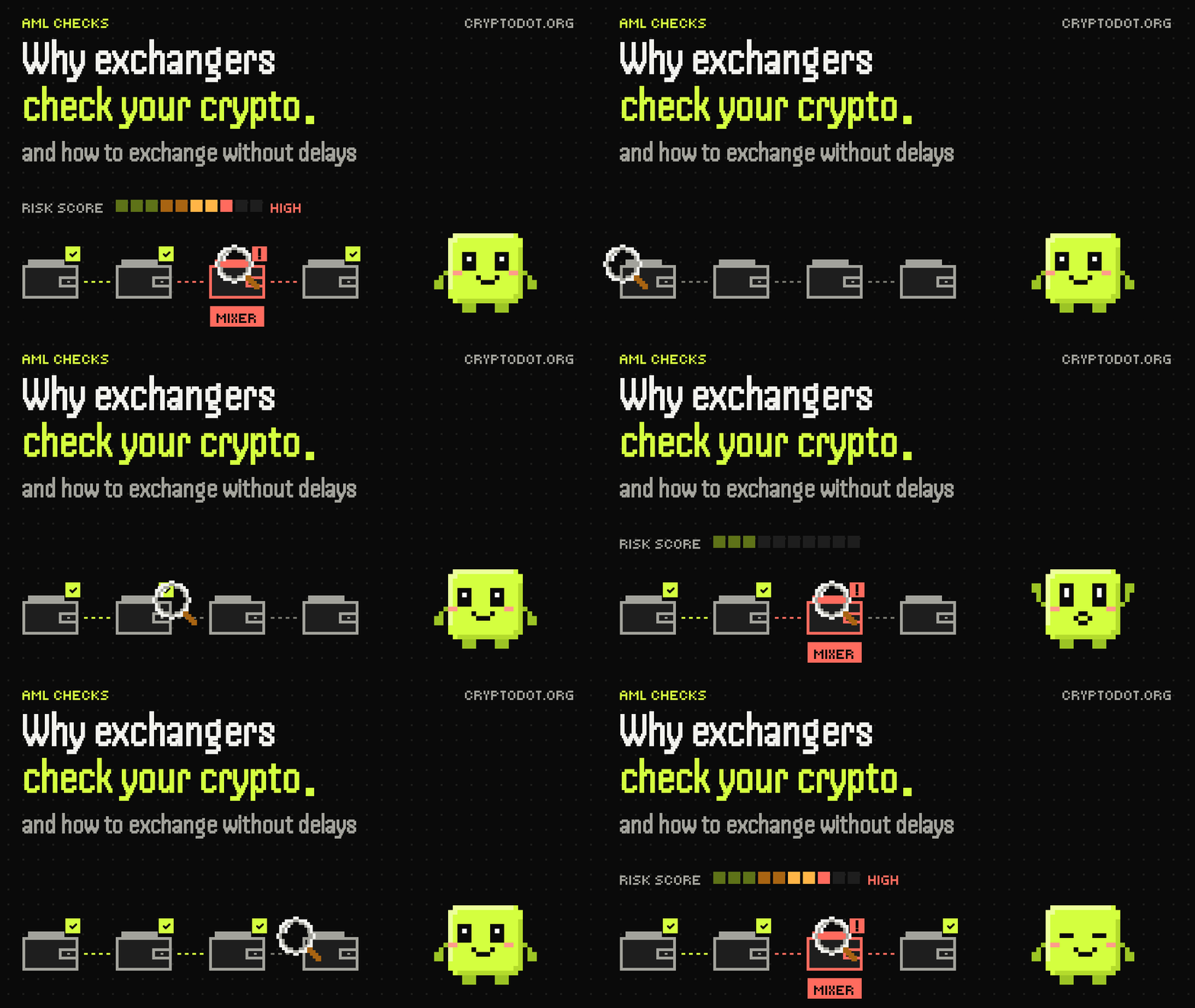
When you exchange USDT or BTC, the service may put your order on hold even if the transaction is already confirmed on the blockchain. One possible reason is an AML check. It helps find out where the funds came from and whether they are linked to suspicious addresses.
Below we explain how the check works, why it affects regular users and what to do before you exchange crypto.
What AML is and why crypto gets checked
AML (Anti-Money Laundering) is the set of measures used to fight money laundering. In crypto this is done with blockchain analytics. Special systems look at the transaction history and at how a wallet is connected to known sources of risk.
For example, a check may find links to:
- scam wallets and stolen funds;
- addresses on sanctions lists;
- darknet marketplaces;
- mixers and other high-risk services.
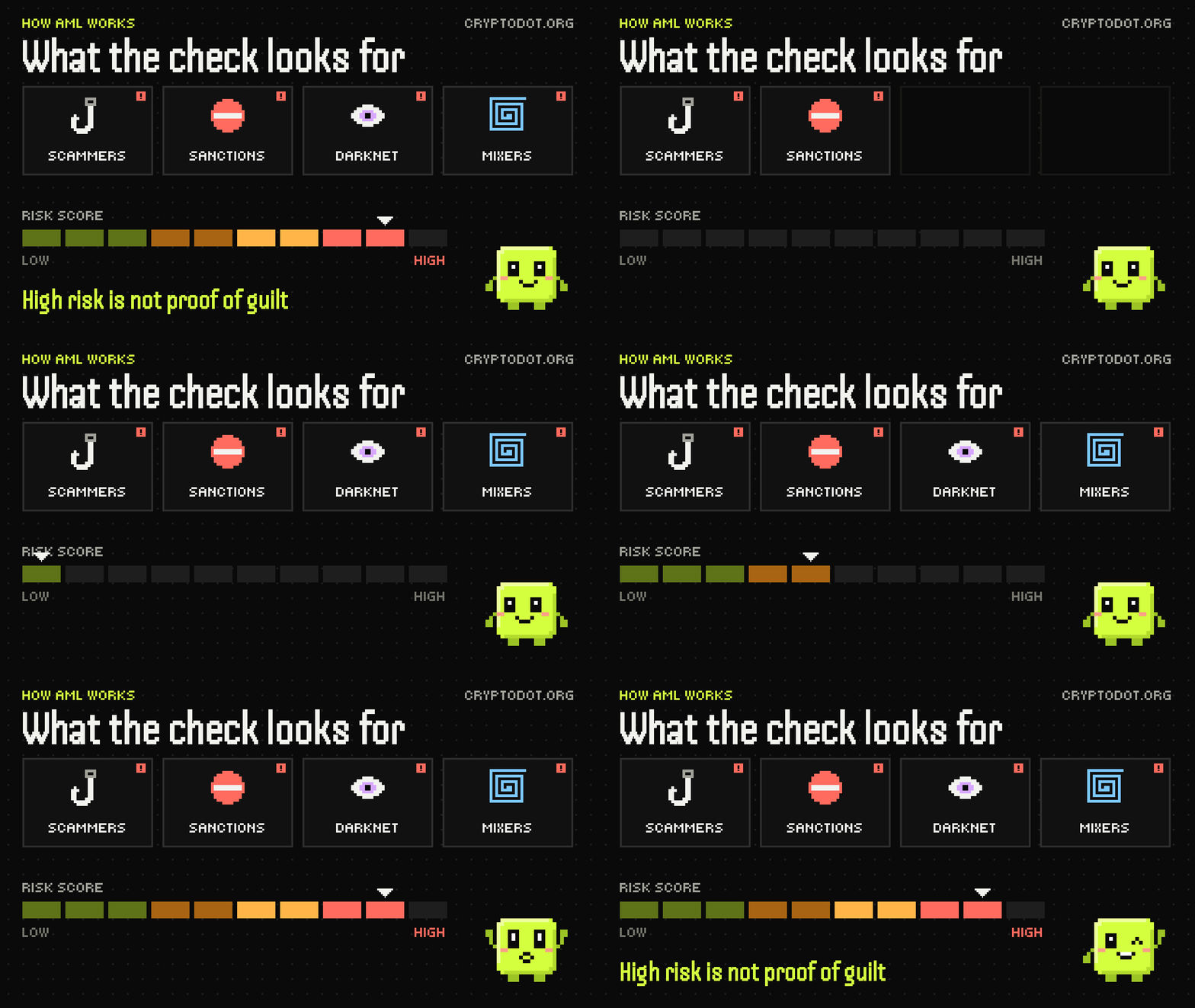
After the analysis, the address or transaction gets a risk score. The higher the score, the more reason there is for an extra check. But a high risk score does not prove that the wallet owner broke the law.
Why this matters for regular users
Say you received 1,000 USDT through P2P from a seller you don't know. The money arrived in your wallet, the transaction is confirmed, and nothing looks wrong.
But those USDT have a history. Before they reached your address, they may have passed through dozens of other wallets, including some linked to fraud or other suspicious activity.
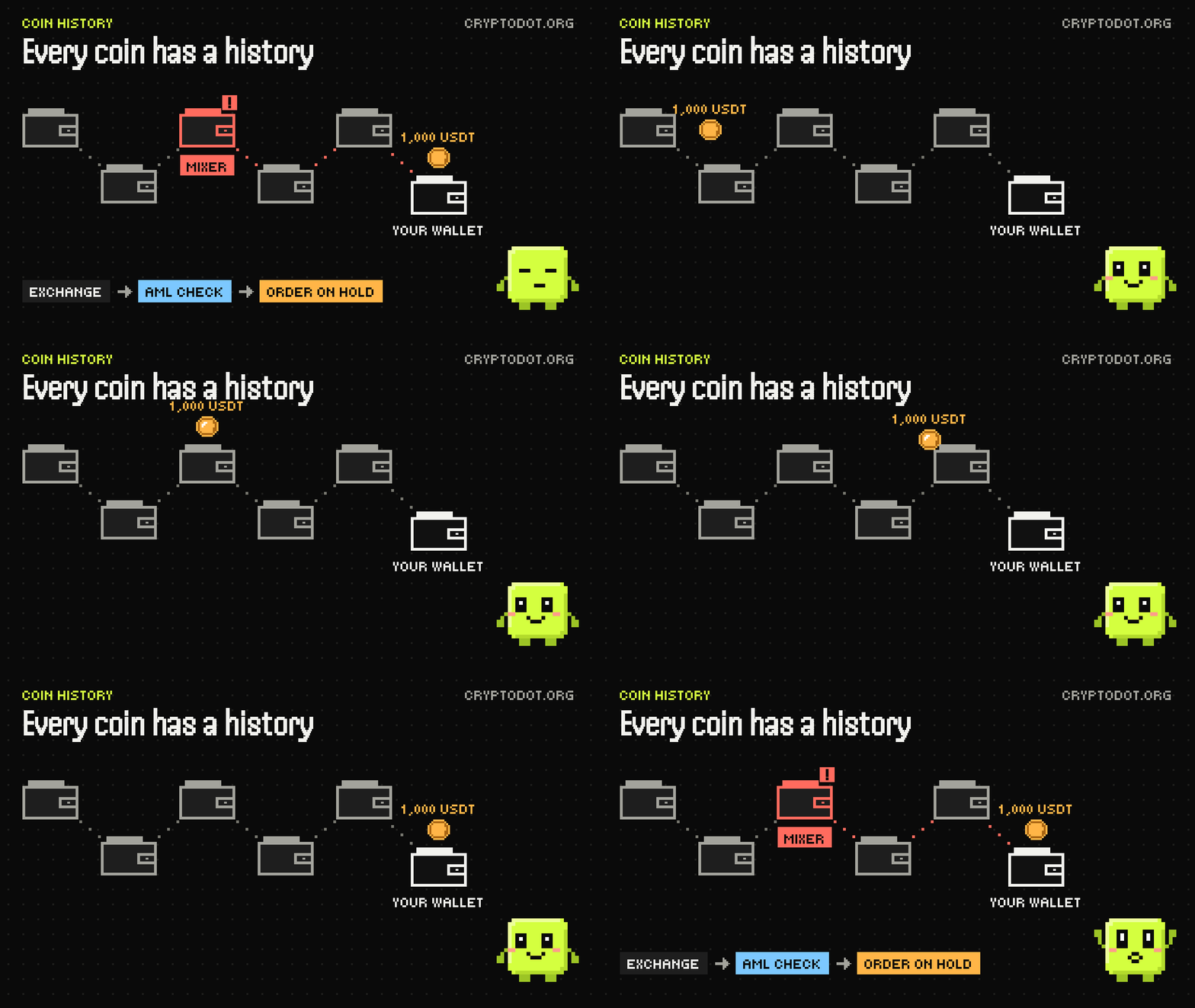
When you decide to exchange those USDT for rubles, the service will check the transaction. If the analytics system detects elevated risk, the exchange may be paused for a while and you may be asked to show where the funds came from.
Getting crypto from an unknown sender does not automatically mean the coins are a problem. It works the other way too: if nothing warned you when the coins arrived, that does not guarantee they will pass the check when you exchange them later.
How to avoid delays when exchanging
A few simple tips:
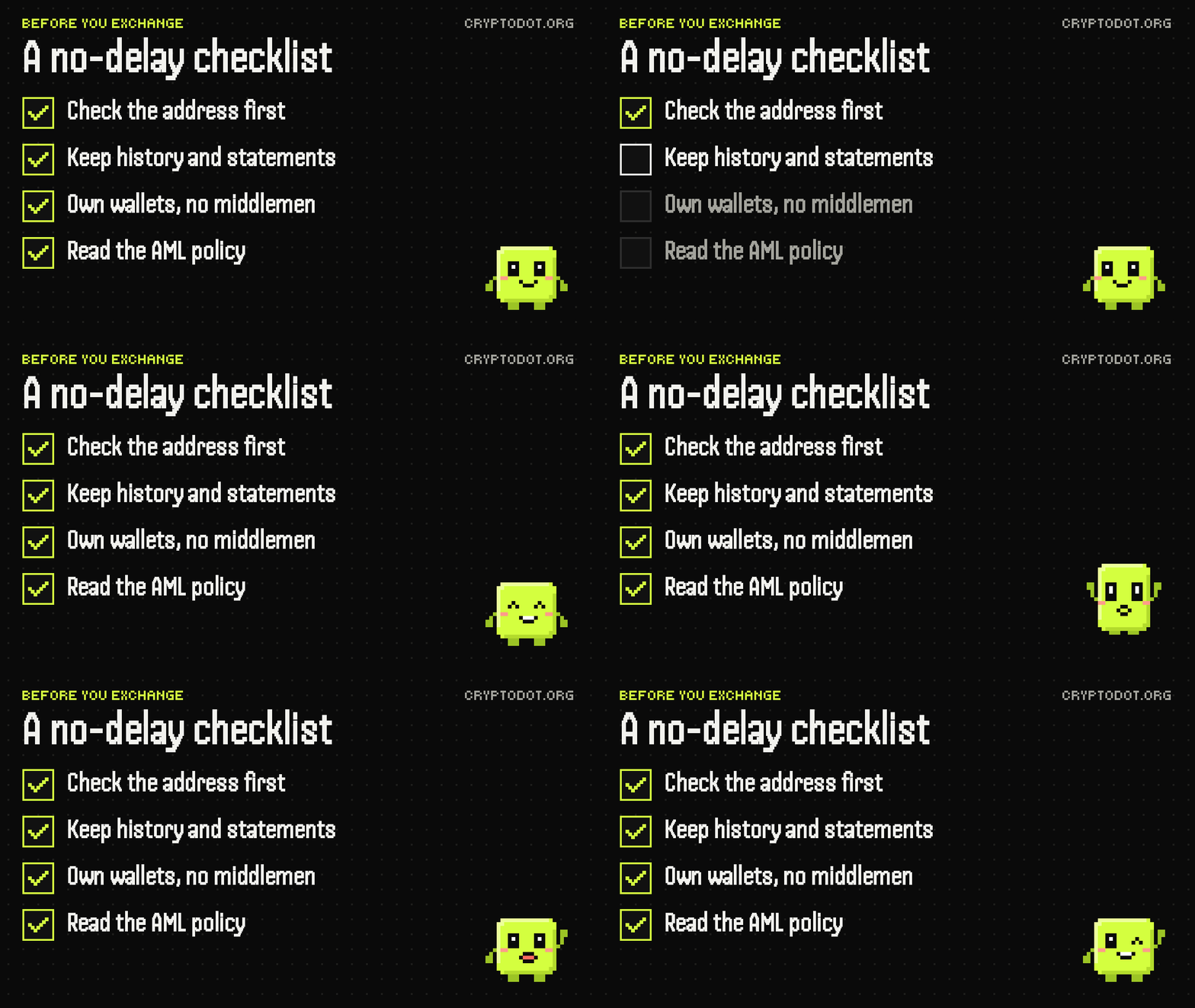
- Check the AML risk of your own address before you send funds, especially if you have received crypto from people you don't know.
- Keep your transaction history, purchase confirmations and exchange statements. They make it easier to prove where the funds came from.
- When you can, use your own wallets and exchange accounts instead of sending money through middlemen.
- Read the service's AML/KYC policy before you exchange. Risk thresholds and the rules for extra checks can differ from one platform to another.
At Cryptodot, incoming crypto transactions go through an AML check. If the risk score is above the threshold or there is a direct link to a high-risk source, the exchange is paused until the check is complete. The rules for checks and refunds are in our AML/KYC/KYT policy.
What to do if your exchange is on hold
First, contact the exchanger's support and ask why the order is delayed. If you are asked to confirm where the funds came from, prepare your transaction history, an exchange statement or other documents related to the transfer.
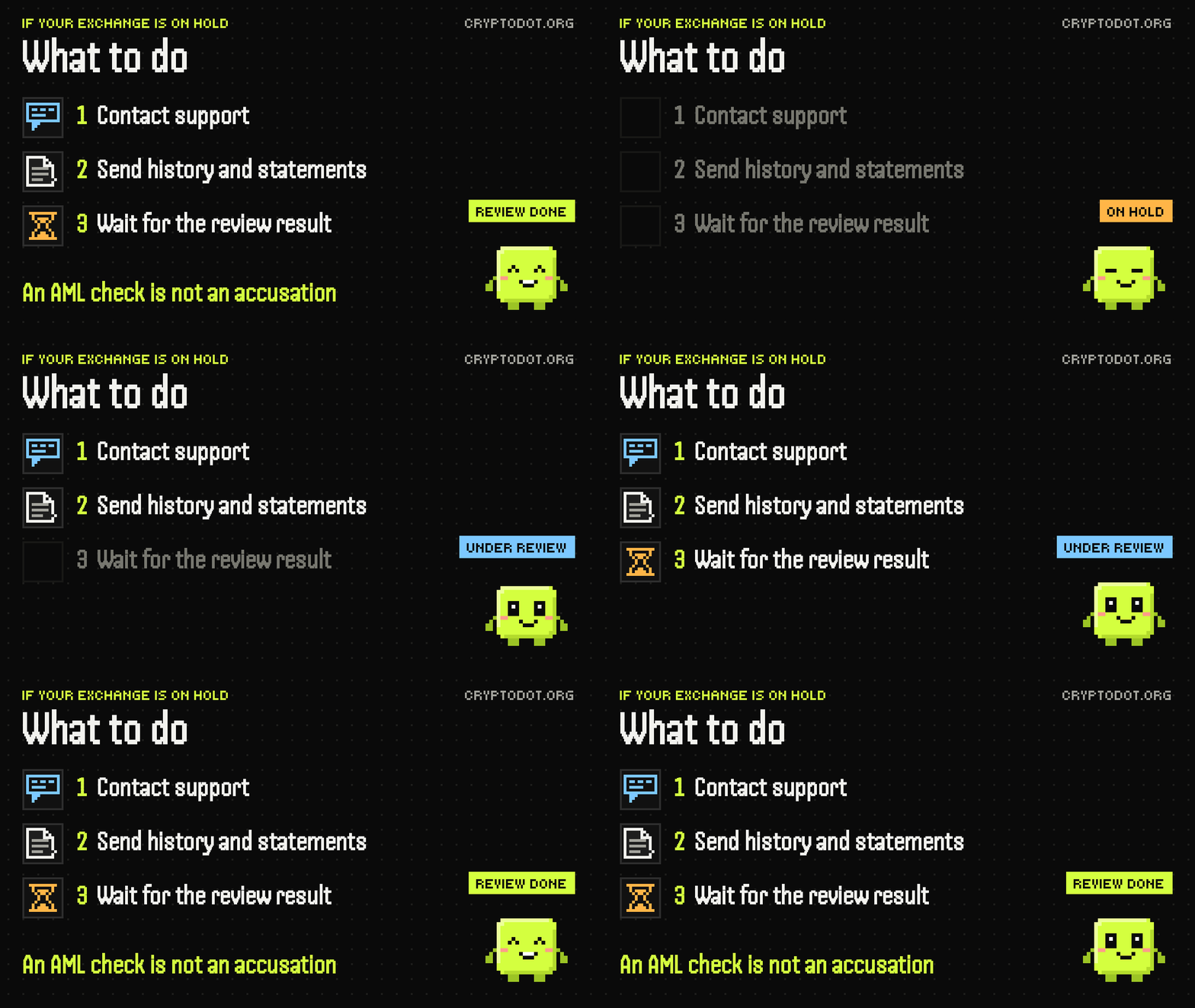
An AML check is not an accusation of illegal activity. Its purpose is to find out where the funds came from and to reduce risk for everyone involved in the exchange.
Checking an address in advance is usually easier than sorting out an order that is already on hold. For a preliminary risk assessment you can use an AML service such as BitOK. This kind of check does not guarantee that the exchange will go through, but it helps you spot possible problems before you send.
This article was prepared together with BitOK, an AML screening service for crypto.
If you have questions about AML checks, contact our support: all the ways to reach us are on the Contacts page.